Tusi Sites
Introduction
The Tusi sites, located in the mountainous regions of southwest China, represent a unique form of governance established by the central government over ethnic minority regions. The term "Tusi" refers to tribal chieftains appointed by the central authorities to govern non-Han ethnic groups from the 13th to the early 20th century. This governance system allowed the Tusi, or chieftains, to retain their traditional customs and way of life while integrating into the broader national administrative framework. The Tusi sites inscribed on the World Heritage List in 2015 consist of three primary locations: Laosicheng in Hunan province, Tangya in Hubei province, and Hailongtun Fortress in Guizhou province. These sites collectively embody the historical and cultural significance of the Tusi system.
Tusi Government System
The Tusi Government System was a unique administrative framework utilized by Chinese emperors to exert control over non-Han ethnic regions in southwestern China. This system, which originated during the Yuan Dynasty (1271-1368) and persisted through the Qing Dynasty (1636-1912), was designed to integrate ethnic minority areas into the broader Chinese administrative structure. Under this system, local chieftains, known as "Tusi," were appointed by the central government to govern their respective regions. These hereditary rulers maintained local customs and practices while ensuring allegiance to imperial authority.
The Tusi system was instrumental in managing the diverse ethnic landscape of China. It allowed for the coexistence of centralized administrative control and local autonomy, facilitating the incorporation of ethnic minority groups into the Chinese empire without eradicating their cultural distinctiveness. The Tusi chieftains served as intermediaries, governing vast territories and maintaining social order by balancing imperial directives with indigenous traditions.
Three significant sites—Laosicheng in Hunan province, Tangya in Hubei province, and Hailongtun Fortress in Guizhou province—exemplify the Tusi governance model. These sites provide invaluable insights into the architectural, social, and cultural dimensions of the Tusi system. Laosicheng and Hailongtun Fortress were high-ranking Tusi domains, featuring comprehensive administrative complexes and fortifications. Tangya, representing a lower-ranking Tusi domain, includes a notable Memorial Archway, administrative remnants, and tombs.
Cultural Heritage and Archaeological Significance
The Tusi sites are of immense cultural and archaeological importance as they provide insight into the governance and societal structures of ethnic minorities in China. Each site reflects a unique blend of ethnic and central Chinese administrative practices, showcasing the harmonious coexistence of diverse cultural traditions.
Laosicheng Tusi Domain in Hunan province
Laosicheng, located in the western part of Hunan province, serves as a significant representation of the Tusi governance system. It was one of the largest and most influential Tusi domains, managed by the Tujia ethnic group. The site includes archaeological remains such as ancestral halls, residential areas, and defensive structures, which demonstrate the sophisticated governance and social organization of the Tusi leaders. Laosicheng is notable for its integration of traditional Tujia cultural elements with Chinese architectural styles, exemplifying the cultural exchange fostered under the Tusi system.
Hailongtun Fortress in Guizhou province
Hailongtun Fortress, situated in Guizhou province, is another critical site within the Tusi system. Built in 1257, the fortress represents a high-ranking Tusi domain and is renowned for its strategic military architecture. The site includes defensive walls, gates, and other fortifications that reflect the military prowess and administrative authority of the Tusi chieftains. Hailongtun Fortress highlights the role of the Tusi as both leaders and protectors of their communities, illustrating the dual nature of governance and defense inherent in the Tusi system.
Tangya Fortress in Hubei province
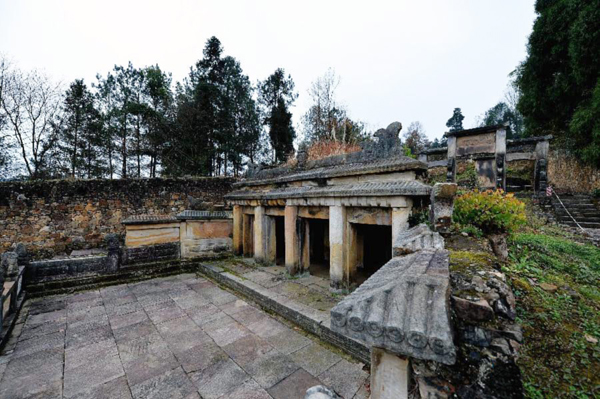
Tangya Fortress, located in Hubei province, provides a glimpse into the domain of a lower-ranking Tusi. The site covers more than 100 hectares and includes significant architectural and cultural features such as the Memorial Archway, administration areas, and tombs. The chieftains of Tangya were part of the Qin family, who maintained control over the region for over 460 years until the abolition of the Tusi system in the Qing Dynasty. Tangya Fortress exemplifies the enduring nature of the Tusi governance model and its ability to adapt and thrive over several centuries.








